
Reflections and Learning from MSRH and ASRH Training on Remba Island

Power for the People's delivery of Adolescent Sexual and Reproductive Health (ASRH) and Community Menstrual and Sexual Reproductive Health (MSRH) training on Remba Island provided important insights into both the importance of adolescent health education and the realities of delivering programmes within a complex island context. The experience highlighted what works, what challenges remain, and how future programmes must adapt to local realities.
One of the clearest insights from the training was the urgent need for MSRH and ASRH education for adolescents on Remba Island. The island's dense population and limited public services contribute to heightened vulnerabilities, including gender-based violence, mental health challenges, and limited access to sexual and reproductive health information. These realities made Remba a priority intervention area for PFP.
The training placed a strong emphasis on participatory and youth-friendly learning approaches designed to create safe and supportive spaces for discussion. Through group discussions, role plays, and the use of a confidential Health Question Box, learners were encouraged to engage openly with sensitive topics such as personal safety, relationships, emotional wellbeing, and decision-making surrounding early sexual activity. One of the strongest lessons from this approach was that when adolescents feel safe and respected, they are more willing to ask questions, share experiences, and engage meaningfully with MSRH and ASRH education.
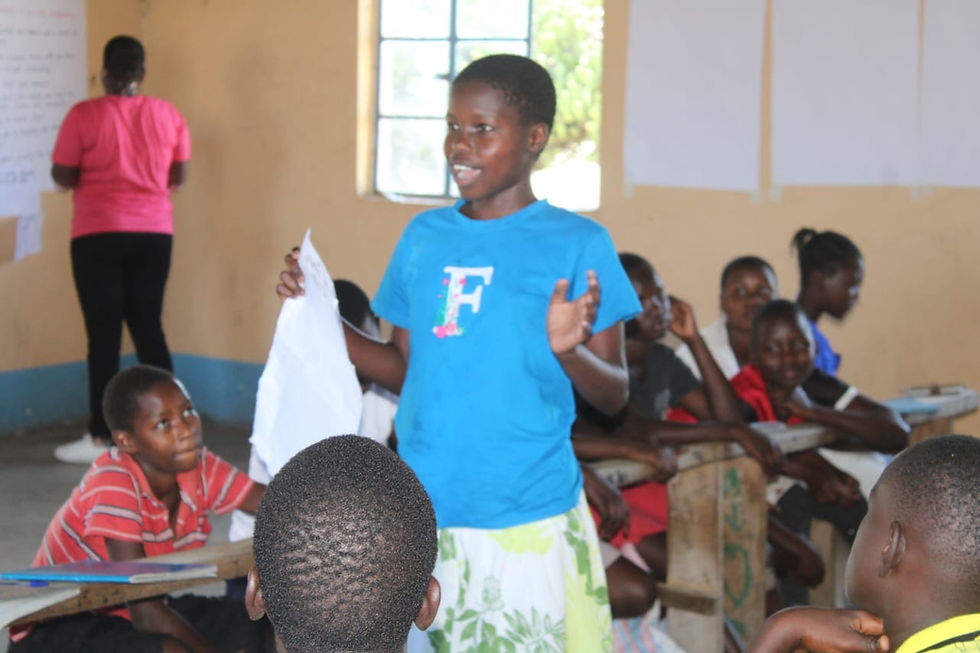
During the course of the training, menstrual hygiene management emerged as one of the most impactful areas of learning. Practical demonstrations on the use and care of Arise reusable pads helped normalise conversations around menstruation while addressing a significant barrier to school attendance for many girls. The inclusion of boys in these discussions also played an important role in reducing stigma and promoting empathy, reinforcing that menstrual health is a shared responsibility within the school community. For many girls, receiving reusable pads represented more than access to a product. It marked a moment of dignity and confidence, highlighting the connection between menstrual health, education, and opportunity.

While the training demonstrated strong engagement among participating learners, it also highlighted important challenges. Attendance was lower than anticipated, particularly among adolescent girls, largely due to information not reaching them in time rather than a lack of interest. Some parents and community members also expressed limited understanding of PFP's role on the island, revealing communication gaps that affected community awareness and participation. This reinforced a key learning from the Remba experience: that access to information is as important as the information itself.
The training also highlighted broader system-level realities within the Remba context. Weak linkages between Community Health Promoters and households limited opportunities for follow-up and demonstrated that sustainable models require strong community health foundations. This experience reinforced the importance of building trust, strengthening relationships, and ensuring clear community health systems before introducing more complex programme approaches.
Overall, the Remba training reaffirmed the importance of adapting programmes to context rather than applying uniform approaches across communities. With continued MSRH education, stronger community engagement, and sustained system strengthening, Remba has the potential to build safer and more informed futures for its adolescents.
To read the full report and learn more about the Remba training programme, click the document below.


